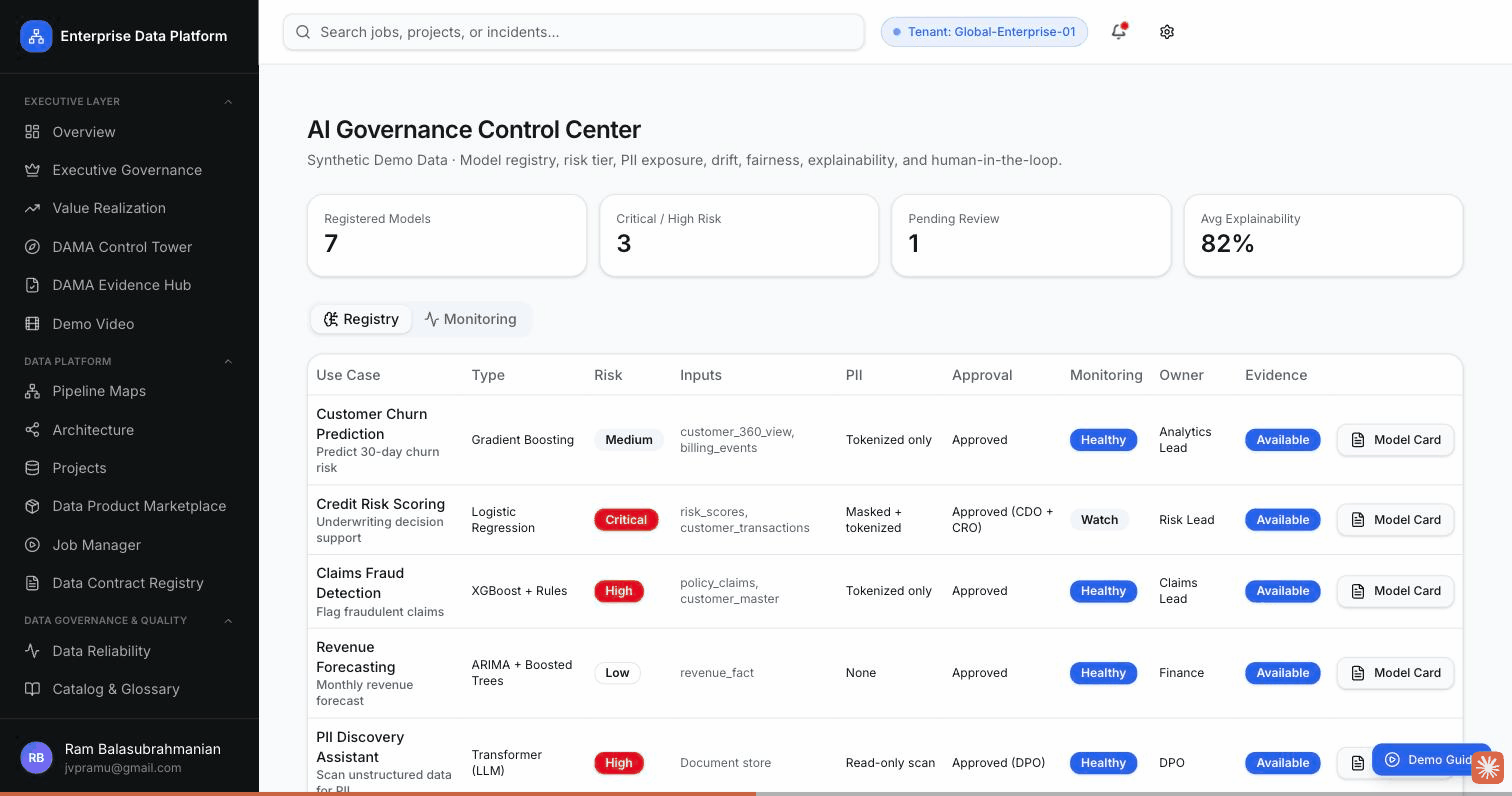
An Enterprise Data Platform is not just a place where data lands. In regulated environments, it is the operating system that connects ingestion, quality, lineage, stewardship, privacy, access control, observability, audit evidence and responsible AI use. The goal is not only to move data faster. The goal is to make data trusted enough for decisions, controls, reporting and machine learning.
Ram Balasubrahmanian built this guide from hands-on enterprise platform experience at FICO and EY, where data operations had to support regulated BFSI workloads, client onboarding, production incident reduction and audit-ready evidence. The companion Pipeline Pulse demo turns abstract DMBOK concepts into practical screens: quality rules, evidence hubs, governance workflows, DAMA control views, AI governance checks and reliability signals.
What an Enterprise Data Platform must do
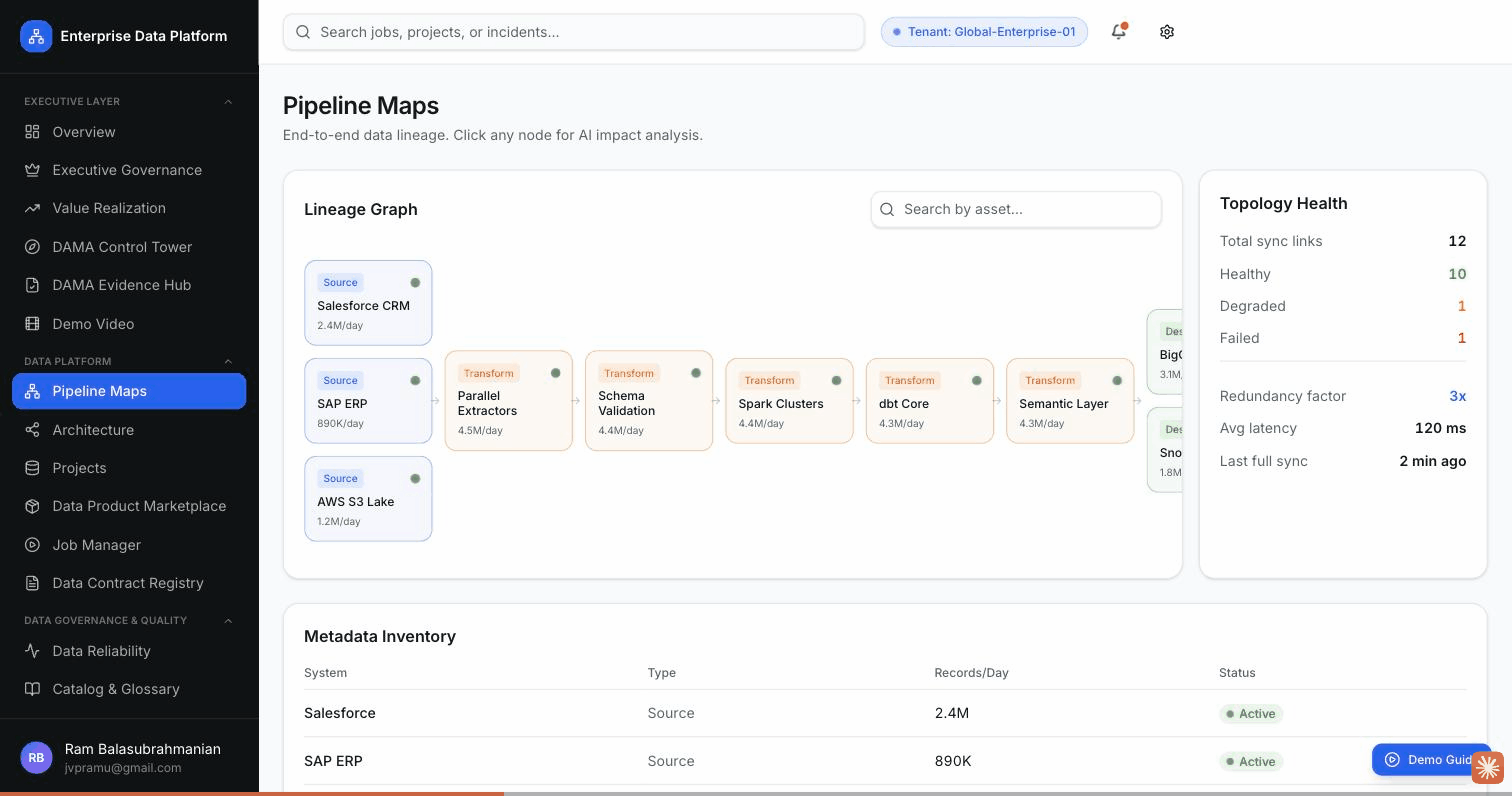
A strong platform brings multiple disciplines into one control plane. Data architecture defines how data moves. Metadata explains what the data means. Data quality detects and prevents defects. Governance assigns ownership and decision rights. Privacy and security control who can use sensitive data. DataOps makes reliability visible. AI governance ensures model inputs, usage and evidence are controlled.
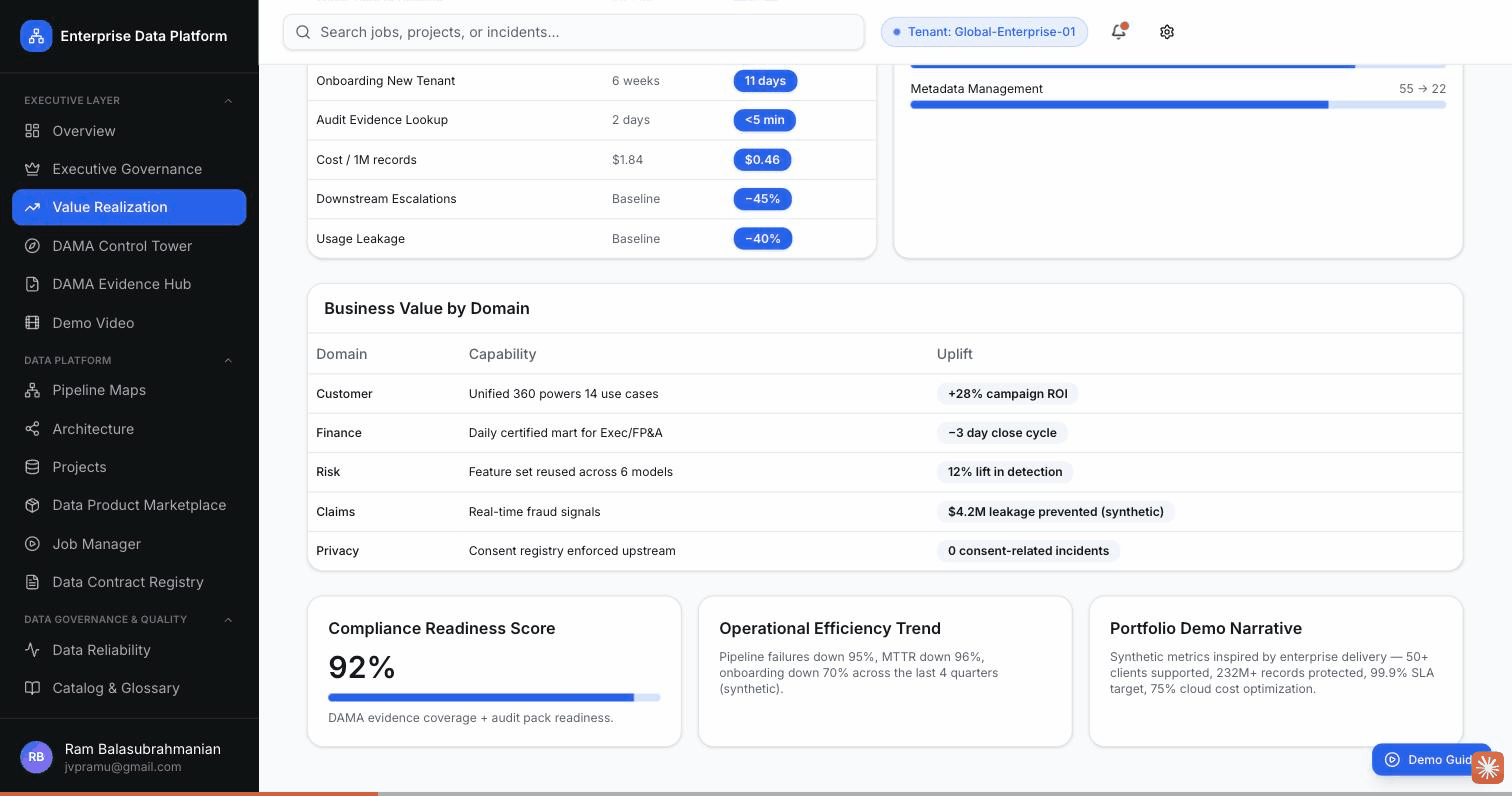
When these disciplines are separated, teams get dashboards without accountability. When they are connected, every recurring defect can become a metadata rule, every incident can become RCA evidence, and every control can become part of the normal delivery workflow.
DMBOK as working software
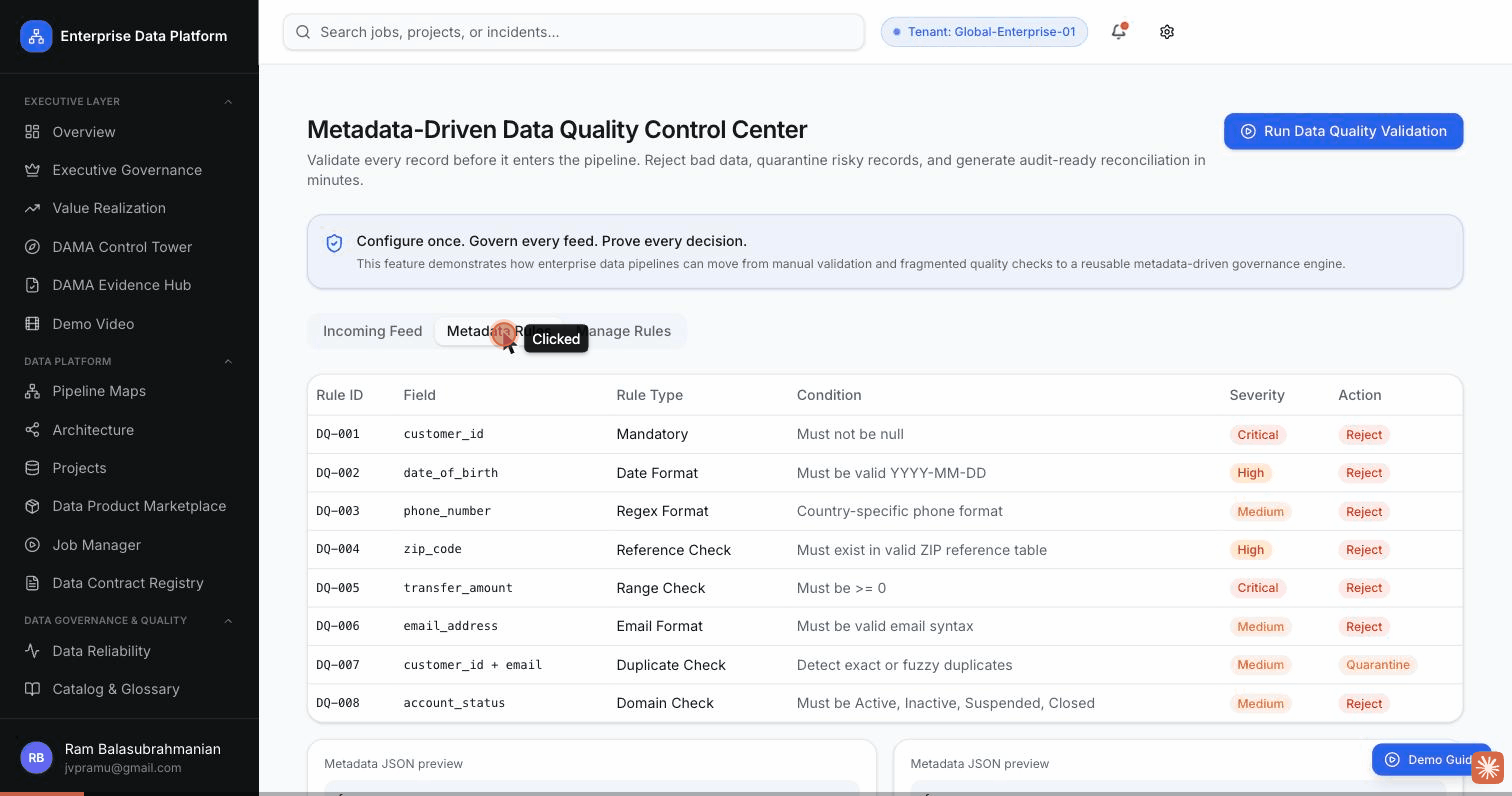
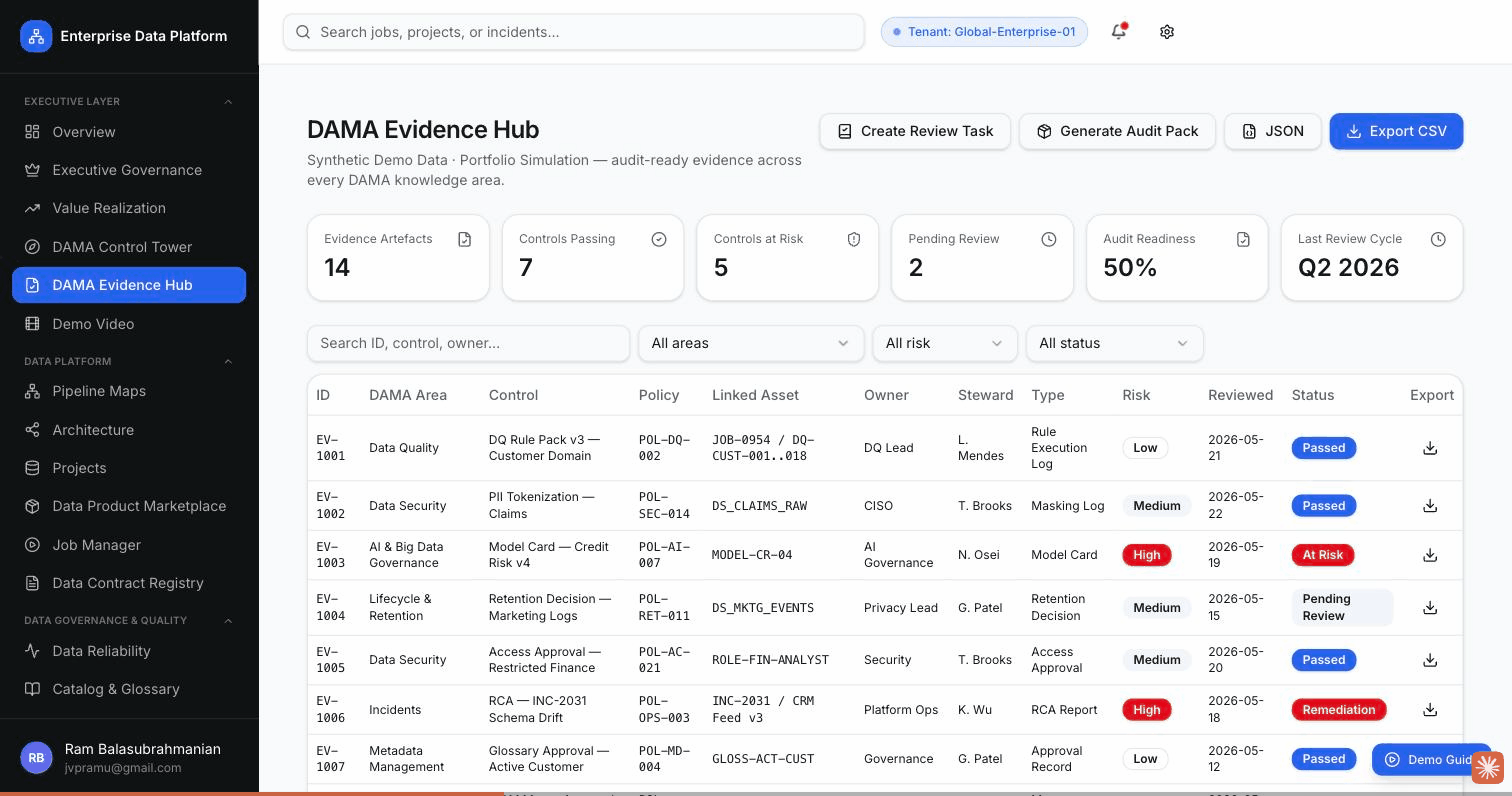
DAMA-DMBOK is often taught as a framework, but students and leaders learn faster when they see it as working software. Data quality becomes reusable rules, thresholds, quarantine and reconciliation. Metadata becomes ownership, lineage and schema context. Governance becomes decision rights, sign-off workflows and stewardship queues. Privacy becomes masking, access policies and audit trails. Architecture becomes visible movement from source to consumption.
This is why the EDP Knowledge Hub includes an interactive runbook, a PDF download, visual previews and reusable templates. It is designed for two audiences at once: students who want to understand data management concepts, and data leaders who want to see how operating models become platform controls.
Field principle: Data quality does not improve because teams add more dashboards. It improves when every recurring defect becomes a metadata rule, ownership signal, evidence artifact and prevention control.
Learning paths in the guide
- EDP foundations: business purpose, platform users, first-time navigation and the control-plane mindset.
- Architecture and platform operations: pipeline maps, job managers, project views, reliability signals and operational telemetry.
- Data quality and DataOps: metadata-driven DQ rules, reconciliation, quarantine, incidents, SLOs and prevention loops.
- Governance, security and audit: evidence hubs, RBAC/ABAC, privacy controls, lineage and sign-off patterns.
- AI governance: model risk, explainability evidence, drift, human review gates and responsible-use controls.
- DMBOK teaching companion: mapping DAMA knowledge areas to real operational controls.
Use the runbook and templates
The full runbook is available as both a PDF and an interactive HTML guide. Practitioners can also download templates for incident RCA, data quality rule design, data asset onboarding, governance RACI and DMBOK maturity self-assessment.
Download the Enterprise Data Platform Runbook or open the interactive runbook.